Shopify vs Etsy for Indian Exporters: Which Platform Should You Choose?
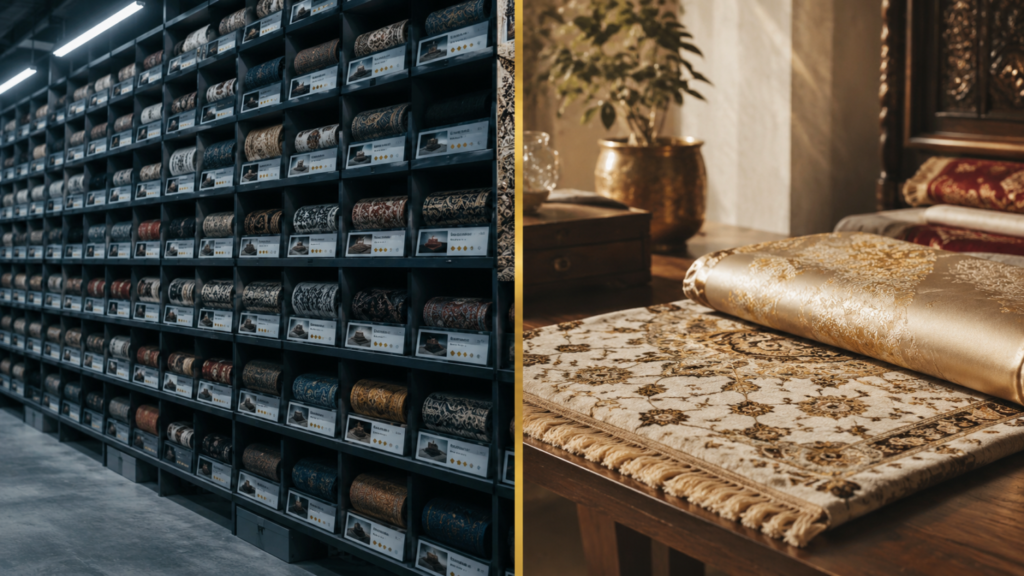
A calm, founder-to-founder breakdown of fees, control and buyer reach — so you choose the platform that fits your export brand, not the one that fits everyone else.
AI Summary
For Indian exporters in 2026, Etsy and Shopify solve different problems. Etsy is a global marketplace with built-in craft buyers but a heavy per-order fee stack — $0.20 per listing, a 6.5% transaction fee, a 5% + ₹25 India payment fee, and Offsite Ads of 12–15% that become mandatory past $10,000 in sales, with payouts only via Payoneer in USD. Shopify is an owned storefront with no sales commission, but Shopify Payments is unavailable in India, so sellers use a third-party gateway (Razorpay, Cashfree, PayU) plus Shopify’s own 0.5–2% transaction fee by plan tier, and must generate their own traffic. The practical answer for most heritage exporters is to sequence, not choose: start on Etsy to validate international demand, then move to Shopify to own the buyer relationship, data and brand as you scale.
Figures indicative for 2026 — verify against each platform’s current pricing.
The real question behind Shopify vs Etsy for Indian exporters
Most conversations about Shopify vs Etsy for Indian exporters start in the wrong place — with monthly price. I understand the instinct. When you are shipping Banarasi silk to a boutique in London or Bhadohi rugs to a dealer in the Gulf, every rupee of margin matters, and a plan that costs ₹399 a month looks safer than one that costs ₹5,599.
But price is the least interesting part of this decision. I have sat in enough export offices in Varanasi and Bhadohi to know that the platforms are not really competing on cost. They are competing on something more fundamental: who owns the relationship with your buyer, and who owns the demand.
Etsy rents you a shelf inside a crowded, high-intent marketplace. Shopify hands you the keys to your own building on an empty street. One gives you traffic and takes a cut of everything. The other gives you control and asks you to bring your own buyers. For a heritage exporter, that difference shapes the next ten years far more than any listing fee.
What Etsy actually costs an Indian seller in 2026
Etsy’s appeal is honest and real: it is a global marketplace of buyers who are already searching for handmade, vintage and craft-led goods. For a Varanasi weaver or a handicraft atelier, that built-in intent is worth taking seriously. You are not starting from silence.
The trade-off is a fee stack that compounds quietly on every order. As of 2026, an Indian seller pays a one-time shop setup fee of $10, a listing fee of $0.20 per item that renews every four months or when the item sells, a transaction fee of 6.5% on the item price plus shipping, and — this is the India-specific line most sellers underestimate — a payment processing fee of 5% + ₹25 per order. On top of that sits Offsite Ads: 15% of the sale (12% once you have crossed $10,000 in sales over 365 days), which becomes mandatory once you pass that same $10,000 threshold. Etsy publishes all of this in its Fees and Payments Policy, and it is worth reading line by line before you assume the marketplace is the cheaper route.
There is also the matter of getting paid. Indian sellers cannot use Etsy Payments directly; payouts arrive in USD through Payoneer, typically weekly, and Payoneer’s withdrawal and conversion can take up to roughly 3% more before the money reaches your bank in rupees. A valid GSTIN is required to sell at all.
Add it honestly and a single ₹8,000 order can shed 15% to 30% before it lands in your account — before Offsite Ads. That is not a reason to avoid Etsy. It is a reason to price for it, and to never mistake marketplace revenue for a brand you own.
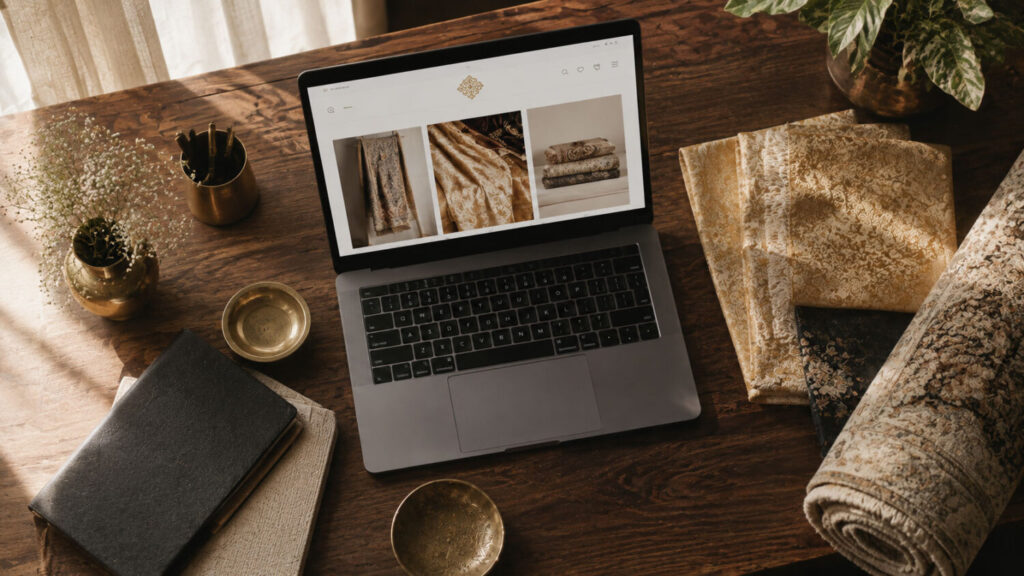
What Shopify actually costs — and what it gives back
Shopify is the opposite proposition. In India, plans run from a lightweight Starter tier at around ₹399 a month, to Basic near ₹1,499, Grow near ₹5,599, Advanced near ₹22,680, and Shopify Plus for larger operations from roughly ₹1.5–2 lakh a month upward. Shopify’s own pricing page carries the current figures, and I would verify them before you commit, since they shift.
Here is the nuance that catches most Indian exporters off guard. Shopify Payments — the built-in processor that lets merchants elsewhere avoid extra platform fees — is not available in India. So you connect a third-party gateway such as Razorpay, Cashfree or PayU for domestic orders, and Shopify still charges its own transaction fee on top for not using Shopify Payments: roughly 2% on Basic, falling to about 1% on Grow and 0.5% on Advanced. That gateway then charges its own processing fee (commonly 2–3%) as well. For international card payments and multi-currency selling, you will typically layer in a gateway or provider that supports cross-border settlement.
It sounds like a lot of moving parts, and it is. But notice what you are buying. On Shopify there is no 6.5% transaction cut on every sale, no per-listing fee, no mandatory advertising tax once you grow. You keep the customer’s email. You keep the data. You keep the brand. The fees are the cost of infrastructure, not the cost of borrowing someone else’s audience. This is the model I build around in Shopify consulting, because for an export brand with a genuine story, owned demand compounds and rented demand does not.
Related Links:
The comparison that actually matters
Set the two side by side and the honest picture looks like this.
Etsy wins on immediacy. If you have finished stock, a GSTIN, and no audience yet, you can list this week and reach buyers who are actively looking for craft. It is the fastest way to validate that international buyers want what you make, and it requires no marketing engine of your own to begin.
Shopify wins on ownership and margin at scale. There is no commission skimmed from every order, your buyer relationships are yours to nurture, and your store becomes an asset that appreciates — one you can optimise, reposition and eventually sell. The cost is that Shopify gives you a storefront, not a crowd. You have to earn the traffic through search, content, positioning and paid media. That is precisely the work of a real ecommerce growth strategy, and it is why a beautiful Shopify store with no demand engine behind it quietly fails.
The deeper issue for heritage exporters is discoverability itself, and it is changing underneath both platforms. Buyers increasingly ask ChatGPT, Gemini and Perplexity — not just Google — “where can I source authentic Banarasi silk” or “best handmade wool rug exporters in India.” Marketplaces rarely surface your brand by name inside those answers; a well-structured owned site can. Getting cited inside AI answers, the discipline of Generative Engine Optimization, is only possible when you control your own domain and content. On Etsy, you are visible as a listing. On your own site, you can become visible as a brand.
So which should you choose?
The framing of “Shopify vs Etsy for Indian exporters” as an either/or is where most founders go wrong. The strongest export brands I work with do not choose one. They sequence.
If you are early — testing whether international buyers respond to your craft, with limited capital and no audience — start on Etsy. Treat it as paid market research with real revenue. Let it prove demand while you learn which products, price points and stories land with UK, US and Gulf buyers.
The moment Etsy is working — when repeat buyers appear, when Offsite Ads and payment fees are visibly eating margin, when you are ready to be a name rather than a listing — build the Shopify store as your home base and migrate the relationship there. Use Etsy for discovery; use Shopify to own what discovery produces. Underneath both, invest early in export brand positioning so that when a buyer finds you — on a marketplace, in a search result, or inside an AI answer — the brand reads as premium, coherent and worth the price your craft deserves.
The platform is a tool. The asset is the brand. Choose the tool that lets you build the asset — and on that measure, for any exporter serious about the next decade, Shopify is where you eventually want to live.
Frequently asked questions
It depends on volume. Etsy has almost no upfront cost but takes 6.5% plus a 5% + ₹25 payment fee on every order, and mandatory Offsite Ads above $10,000 in sales. Shopify charges a monthly plan and smaller per-transaction fees but no commission on sales, so it becomes markedly cheaper per order as you scale.
No. Shopify Payments is not available in India, so you connect a third-party gateway such as Razorpay, Cashfree or PayU. Shopify then adds its own transaction fee — roughly 2% on Basic down to 0.5% on Advanced — for not using Shopify Payments, on top of the gateway’s own processing fee.
Etsy pays Indian sellers in USD through Payoneer, usually on a weekly cycle, which then converts to rupees when withdrawn to your bank. Payoneer’s conversion and withdrawal can cost up to around 3% more, so factor currency loss into your pricing.
Yes for Etsy — a valid GSTIN is required to open a shop. For Shopify, GST registration is generally expected for a compliant Indian business selling online, and is effectively necessary once you cross the registration threshold or sell across states.
Etsy gives immediate access to a global craft-buying audience with no marketing of your own. Shopify gives you an owned storefront that can rank in search and be cited in AI answers, but you must generate the traffic. Most successful exporters start on Etsy for reach and move to Shopify for ownership.
Yes, and many exporters do. A common approach is to use Etsy for discovery and validation while building a Shopify store as the brand home, then guide repeat and higher-value buyers to the owned channel where margins are stronger.

Rahul Agrawal
https://www.rahulkagrawal.inRahul Agrawal helps heritage brands, textile exporters and handicraft businesses grow through AI visibility, GEO, Shopify and ecommerce strategy. Based in Varanasi, serving clients globally.