ChatGPT Ads in India: A Founder’s Guide to the New AI Discovery Channel
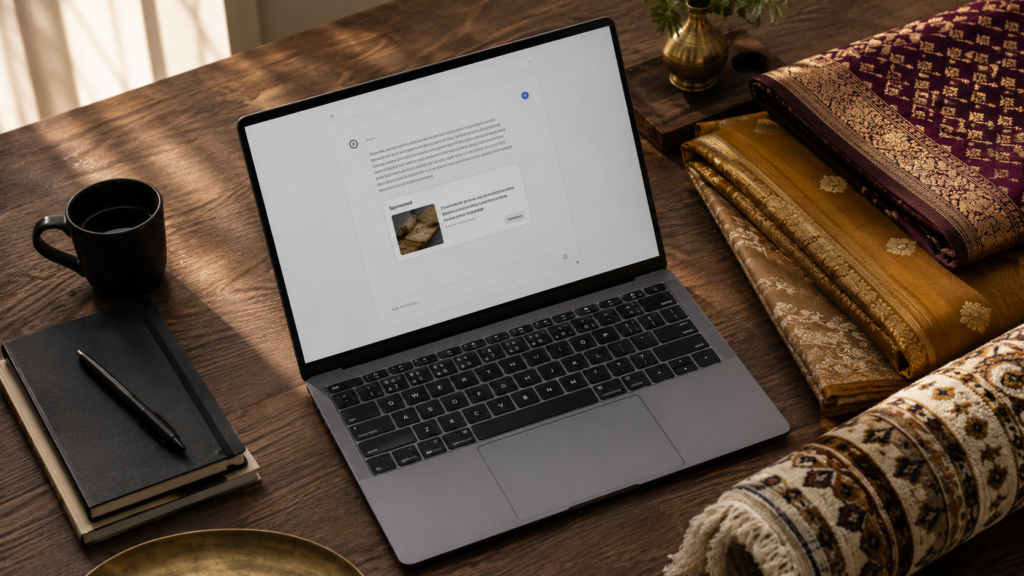
OpenAI has switched on ads inside ChatGPT for Indian users, with self-serve access opening on 4 September. Here is what it means for export and D2C brands, and the small experiment I would run now rather than later.
AI Summary
ChatGPT Ads in India launched in late August 2026 as sponsored product and service results shown beneath ChatGPT answers, visible only to logged-in adults on the Free and Go (₹399/month) tiers. Plus, Pro, Business, Enterprise and Education users see no ads. More than 50 brands began managed campaigns through agencies WPP and Omnicom, and a self-serve Ads Manager opens on 4 September 2026 with daily budgets from ₹725. Ads are clearly labelled, do not change ChatGPT’s answers, and share no conversation data with advertisers.
Figures indicative for 2026 — verify against OpenAI’s current terms before you commit spend.
What ChatGPT Ads in India actually are
ChatGPT Ads in India are sponsored results that appear underneath a ChatGPT answer, shown to logged-in adults on the free tier and the ₹399-a-month Go plan. They went live in late August 2026. Anyone on Plus, Pro, Business, Enterprise or Education does not see them. The ads are marked as sponsored, kept visually separate from the answer, and, as OpenAI has repeatedly stressed, do not change what the model tells you. CNBC reported that the advertising is meant to fund broader access to ChatGPT through the free and lower-cost tiers.
For most founders reading this, the more important date is 4 September, when OpenAI opens self-serve access to its Ads Manager in India. Until now, campaigns ran through the company and its first agency partners, WPP and Omnicom, with more than 50 brands in the opening cohort. Self-serve changes the equation for smaller businesses: daily budgets start at ₹725, roughly $7.60 (Source: Quartz, 2026), which is well within reach of an export house or a D2C brand running a genuine test.
The scale behind this is not trivial. ChatGPT reached 330 million monthly users in India by May 2026, one of its largest markets anywhere (Source: Business Standard, 2026). India is, in effect, OpenAI’s early test market for AI-native advertising. That is unusual, and worth noticing. For once, an Indian business is not waiting eighteen months for a channel to arrive from the West.
Why ChatGPT Ads matter for export and D2C founders
Every advertising platform sells a different signal. Meta sells who you are: age, interests, lookalike audiences. Google sells what you typed: a keyword caught at the moment of search. ChatGPT sells something narrower and, for a considered purchase, more valuable: what a buyer is actively trying to figure out.
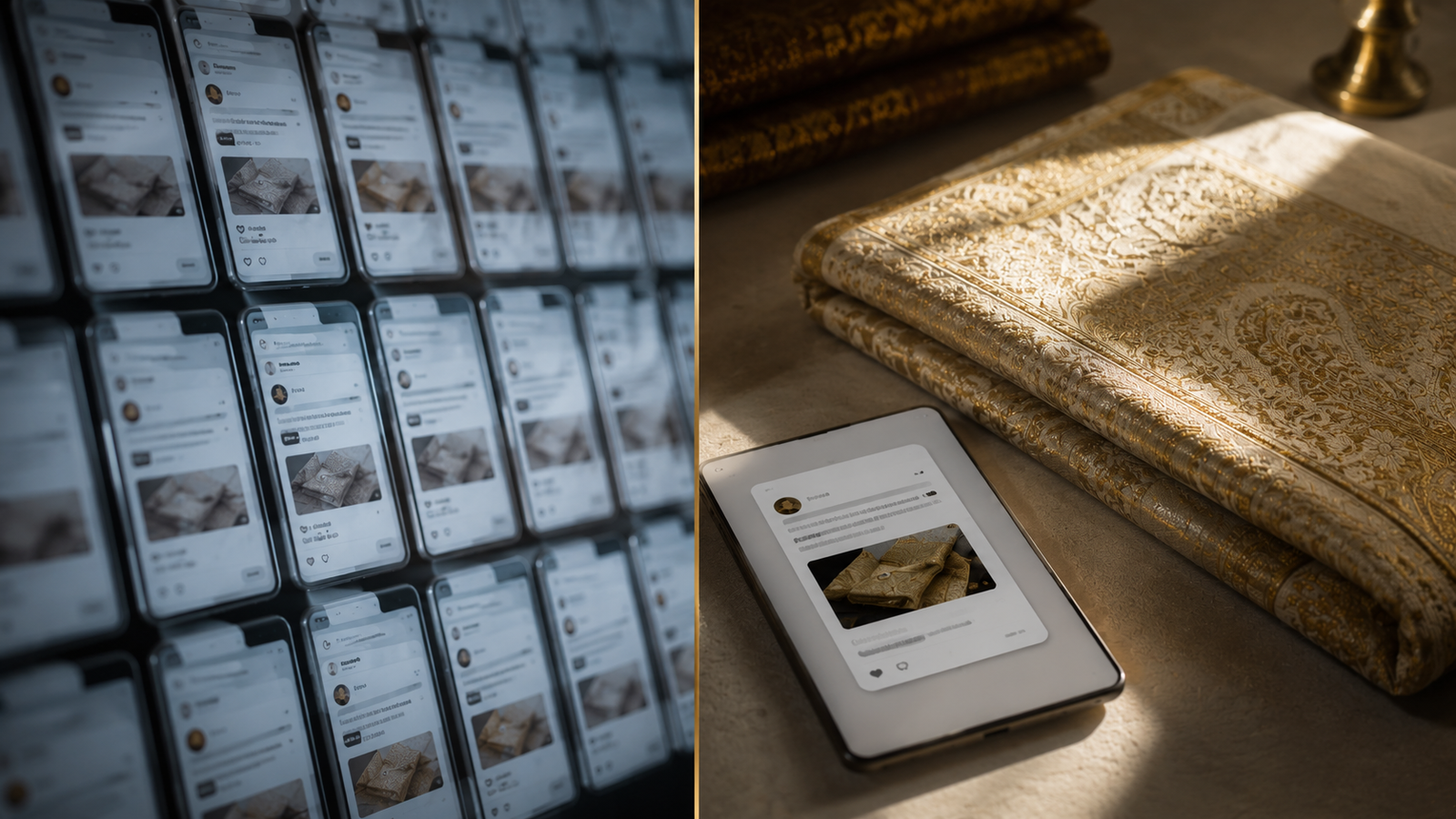
Think about how a buyer actually uses ChatGPT. A boutique owner in London does not type “Banarasi silk supplier” and scan ten blue links. She asks, in full sentences, how to find an authentic Banarasi silk weaver in India who can handle small wholesale orders, and then keeps asking follow-ups. That is a buyer mid-decision, describing her exact problem in her own words. An ad that appears in that moment is not interrupting her. It is arriving precisely when the decision is taking shape.
For heritage exporters and D2C founders, that is the interesting part. In my work at SacredWeaves, a Banarasi saree brand shipping worldwide, the hardest and most expensive work was always the same: reaching the right buyer at the moment they were ready to trust a brand from Varanasi they had never heard of. A channel that surfaces you inside a research conversation, rather than in a crowded feed, deserves a careful test. A Bhadohi carpet exporter, a Varanasi atelier like Ethnic House, a handloom D2C label — all of them live or die on being found by serious buyers, not casual scrollers.
ChatGPT Ads vs Google and Meta: a founder’s comparison
Set the three surfaces side by side and the distinct role of each becomes clear.
| Dimension | ChatGPT Ads | Google Search & Shopping | Meta (Instagram / Facebook) |
|---|---|---|---|
| Core signal sold | What the buyer is trying to figure out | The exact query typed | Who the buyer is (interests, lookalikes) |
| Placement | Labelled result below the AI answer | Above and around organic results | In-feed and stories, interruptive |
| Buyer posture | Mid-decision, describing a problem | Actively searching, high intent | Discovery, often passive |
| Data to advertiser | Aggregate only (impressions, clicks) | Rich query and conversion data | Deep audience and pixel data |
| Entry budget | Self-serve from ₹725/day (India) | Flexible, auction-based | Flexible, auction-based |
| Best used for | Reaching considered buyers at research | Capturing existing demand | Building awareness and retargeting |
The honest read: ChatGPT Ads are not a replacement for Google or Meta. They are a new surface with a different buyer posture. Treat them as a complement, and as a place to learn something your existing channels cannot tell you.
What I’d do now: a first ChatGPT Ads experiment
Waiting for a channel to “mature” usually means waiting until it is crowded and expensive. I would rather learn the mechanics now, cheaply, while attention is still scarce. Here is the small experiment I would run.
- Set a modest test budget. Start near the ₹725 daily floor for two to three weeks. This is tuition, not a growth plan.
- Map the questions, not keywords. Write down the ten questions a real buyer asks before choosing you: sourcing, order minimums, authenticity, shipping, GI certification. Those questions are your targeting logic.
- Lead with proof, not adjectives. Your creative should carry one concrete trust signal: years at the loom, a GI tag, a named export market, a real client. Buyers researching inside ChatGPT are already sceptical of hype.
- Point the click at an answer, not a homepage. Send traffic to a specific page that resolves the exact query. If that page does not exist yet, that gap is the reason to build it.
- Measure the full path, not the last click. Track prompt to impression to click to assisted conversion. The wrong metric here is last-click ROAS; the right question is whether ChatGPT-sourced visits show up as branded searches and direct enquiries weeks later.
- Watch for downstream branded demand. The real prize may not be the immediate sale. It may be the buyer who saw you during research, remembered the name, and returned through another door. Instrument for that.
- Keep a control. Run a Google or Meta campaign the same fortnight so you can read ChatGPT Ads honestly against a channel you already understand.
This is the discipline of any serious performance marketing programme: spend small to learn, measure the whole journey, and scale only what proves itself.
The limits worth knowing before you spend
I would not send you into this without the caveats. ChatGPT Ads sit below the answer, not inside it, and OpenAI has said answer independence is non-negotiable, so you cannot buy your way into the model’s actual recommendation. Ads are kept away from sensitive and regulated categories such as health and politics, and advertisers receive only aggregate performance data, with no access to conversations, chat history or personal details (Source: Business Standard, 2026). The self-serve platform is brand new, ad formats are limited at launch, and cross-border targeting for buyers sitting in London or Dubai is unproven from an Indian account. None of this is a reason to stay out. It is a reason to test with money you are willing to treat as learning, and to keep expectations proportionate.
Where paid ChatGPT Ads meet organic GEO
Here is the connection most people will miss. ChatGPT is now a place you can both earn your way into and pay your way onto. The organic discipline of getting your brand cited inside the AI answer itself is Generative Engine Optimization, and it is the long game: structure your site and content so that when a buyer asks ChatGPT for an authentic Indian silk exporter, your name comes up in the answer, unpaid. I have written a full guide to making your business visible in ChatGPT, Gemini and Perplexity that covers that groundwork.
The brands that will win on ChatGPT Ads are the ones who have already done the organic work. If the model already understands who you are and what you are known for, your paid placement lands on prepared ground, and the buyer who clicks finds a brand that reads as coherent and credible. Paid buys you the moment; export brand positioning and a real ecommerce growth strategy are what convert it. The ad is the introduction. The brand is the reason they stay.
My honest advice: do not reorganise your marketing around ChatGPT Ads. Do run a small, well-measured experiment before 4 September becomes old news, and pay close attention to whether ads shown during research create branded demand you can see downstream. That single question is worth more than any launch-week ROAS figure.
Frequently asked questions
OpenAI opens self-serve access to its ChatGPT Ads Manager in India on 4 September 2026, allowing businesses to create and run their own campaigns without an agency. Reported daily budgets start at around ₹725 (about $7.60). Before that date, campaigns ran as managed placements through OpenAI and its agency partners, WPP and Omnicom, with more than 50 brands in the opening cohort.
Ads are shown only to logged-in adults aged 18 and above on the free tier and the ₹399-a-month Go plan. Subscribers to Plus, Pro, Business, Enterprise and Education do not see ads at all. OpenAI has said it does not show ads to accounts it identifies as belonging to users under 18, and keeps ads away from sensitive categories such as health and politics.
When self-serve opens on 4 September, reported daily budgets begin at roughly ₹725, or about $7.60 (Source: Quartz, 2026). Actual cost beyond that floor is auction-based, like most digital ad platforms, so what you pay depends on competition for the moments you target. The low entry point is what makes this realistic for smaller export and D2C brands to test.
No. Ads appear below the AI-generated answer, are clearly labelled as sponsored, and are kept visually separate from the response. OpenAI has stated that answer independence is non-negotiable and that advertisers cannot influence what the model recommends. Advertisers also receive only aggregate metrics such as impressions and clicks, with no access to users’ conversations, chat history or personal data.
They are promising, but unproven for cross-border targeting. The appeal is real: ads can reach a buyer at the exact moment they are researching a sourcing decision in full sentences. The caution is that self-serve targeting for buyers physically in the UK, US or Gulf, run from an Indian account, is new and untested. Run a small, well-measured pilot rather than committing a large budget on launch confidence.
ChatGPT Ads are paid placements shown below the answer. Generative Engine Optimization (GEO) is the organic discipline of structuring your site and content so your brand is cited inside the answer itself, unpaid. Ads buy you the moment; GEO earns you lasting presence. The brands that get the most from ChatGPT Ads are usually the ones that have already done the GEO groundwork, because the model already understands who they are.
Yes, once self-serve access opens on 4 September 2026. The Ads Manager is designed to let businesses of different sizes sign up and run campaigns directly, and the low ₹725 daily floor lowers the barrier considerably. That said, the platform is new, so treat early spend as learning: start small, map the buyer questions you want to appear against, and measure the full path from prompt to assisted conversion.
Written by Rahul Agrawal, AI and ecommerce advisor based in Varanasi, working with textile exporters, handicraft ateliers and heritage D2C brands across India, the UK, the US and the Gulf. Figures quoted are indicative for 2026 and reflect news reports at the time of writing; verify against OpenAI’s current terms before you spend.
Related reading

Rahul Agrawal
https://www.rahulkagrawal.inRahul Agrawal helps heritage brands, textile exporters and handicraft businesses grow through AI visibility, GEO, Shopify and ecommerce strategy. Based in Varanasi, serving clients globally.